
Know Your Home Is Electrically Safe

It’s More Than Just An Inspection, It’s Peace Of Mind For You And Your Home.

Your home’s electrical system works quietly behind the scenes every day, powering the things that make modern life possible. But over time, wiring, connections and electrical equipment can deteriorate, become damaged or fall below current safety standards.

A Domestic Electrical Installation Condition Report (EICR) provides a professional assessment of the condition of your electrical installation, helping identify potential safety issues before they become a bigger problem. Whether you’re buying or selling a property, have an older home, are planning renovations, or simply want peace of mind, an EICR gives you a clearer understanding of the electrical system within your home.
Protect What Matters Most

Know that your home's electrical installation is safe for you and your family.

Electrical faults aren’t always obvious. Ageing wiring, loose connections, damaged accessories or previous alterations can remain hidden until they cause a problem. An EICR provides a detailed assessment of your electrical installation, helping to identify areas that may require attention before they become more serious.

Understanding Your EICR

What is an EICR?


An Electrical Installation Condition Report (EICR) is a professional inspection and assessment of the fixed electrical installation in your home. It determines whether your installation is safe and satisfactory for continued use, while identifying any defects, deterioration or potential safety concerns.

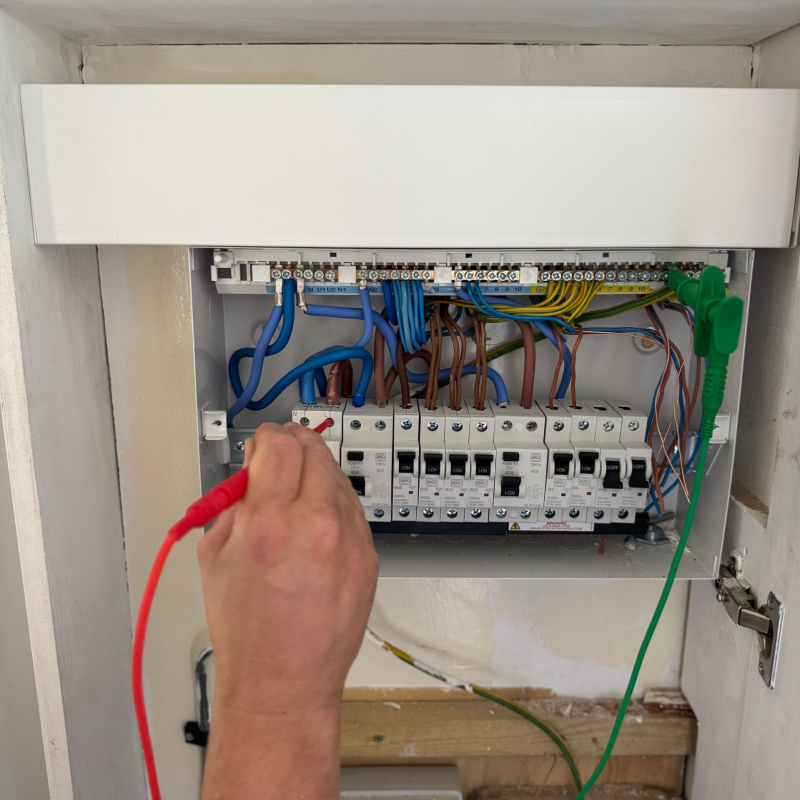
During an EICR, a qualified electrician will inspect and test key areas, including the consumer unit, wiring, sockets, switches, earthing, bonding and protective devices. Their findings are documented in a formal report, providing a clear overview of your home's electrical installation.

An EICR is about more than finding faults. It helps you understand the overall condition of your electrical system and highlights issues that may require attention before they become more serious problems.


When should I have an EICR carried out?


An EICR can be particularly valuable in a range of situations. If you live in an older property, have recently bought a home, are planning major renovations, or are unsure when the electrical installation was last inspected, an EICR can provide valuable reassurance.

For homeowners, an EICR is recommended every 10 years.

For landlords, an EICR is legally required every 5 years and is also recommended at each change of tenancy.

An inspection may also be recommended following significant alterations to the electrical installation or if there are concerns about its condition.

For homeowners, there is no single inspection interval that applies to every property. The appropriate frequency depends on the age, condition and use of the installation, as well as the recommendations made in the previous report.


What does an EICR check?


An EICR includes a visual inspection and electrical testing of your fixed electrical installation. Your electrician will assess the condition and safety of key components throughout the property.

This may include:

Consumer Unit & Protective Devices

Inspecting the consumer unit, circuit protection and other protective devices to confirm they are suitable and operating correctly.

Wiring & Connections

Assessing accessible wiring and connections for signs of damage, deterioration, overheating or other defects.

Sockets, Switches & Accessories

Inspecting fixed electrical accessories for damage, deterioration, unsafe installation or other potential issues.

Earthing & Bonding

Checking the property's earthing and bonding arrangements, which are essential for electrical safety.

Circuits & Electrical Testing

Conducting appropriate tests to assess the condition and performance of the installation's electrical circuits.


How long does a domestic EICR take?


The time required for an EICR depends on the size, age and complexity of the property, as well as the condition and accessibility of its electrical installation.

A straightforward inspection may be completed relatively quickly, while larger or older properties often require more time to ensure all necessary checks and tests are carried out properly.

We never believe in rushing an electrical inspection. Our electricians allow the time needed to assess your installation thoroughly and provide a clear, accurate report.


EICR Price Guide

Every home is different, and so is every EV charger installation. We design each installation around your property, your vehicle and the way you live, ensuring you get the most suitable charging solution for your needs. Installation costs can vary depending on the charger chosen, cable routing and your existing electrical installation. Below is a guide to the typical costs for the most common home EV charging systems.

0-2 Bedrooms

Typical Price Range

£TBC

The Cost-Effective Option

A 3.7kW charger is the slowest dedicated home charging option and is often suitable for plug-in hybrid vehicles (PHEVs) or households with lower daily mileage. Although considerably faster than a standard three-pin plug, charging times are longer than modern 7kW chargers.

3-5 Bedrooms

Typical Price Range

£TBC

The UK's Most Popular Choice

A 7kW charger is the standard installation for most UK homes and offers the ideal balance of charging speed, affordability and compatibility. Most electric vehicles can be fully charged overnight, making this the preferred option for homeowners.

6+ bedrooms

Typical Price Range

£TBC

The Premium Performance Option

A 22kW charger offers outstanding performance for properties with a three-phase supply. Ideal for homes with multiple electric vehicles or high daily mileage, it provides the fastest charging speeds, maximizing convenience and minimizing charging times.

Will I need to upgrade my electrics for a EV charger?

Most homes do not require major electrical upgrades to install a 7kW home EV charger. Before any installation, we'll carry out a thorough assessment of your existing electrical installation to ensure it can safely support your new charger and complies with the latest BS 7671 Wiring Regulations.

If upgrades are required, we'll explain exactly why they're needed and provide a fixed quotation before any work begins.

Additional Circuit Protection

If your consumer unit doesn't have space for a new EV charger circuit, one of the following solutions may be required:

For 3.7KW or 7KW Typical Upgrade Costs

Sub-distribution board £500–£800

Consumer unit (fuse board) replacement £800–£1,000


Three-Phase Supply (22kW Chargers)

A 22kW EV charger requires a three-phase electrical supply, which most UK homes do not currently have.

If your property has a standard single-phase supply, your local Distribution Network Operator (DNO) would first need to upgrade your incoming electrical supply.

Typical costs include:

Three-phase supply upgrade (DNO) £3,000–£15,000

Three-phase distribution board installation £1,000–£5,000


For this reason, 7kW smart chargers remain the preferred and most cost-effective choice for the vast majority of UK homeowners.

Will I know if extra work is required before my EV charger installation?

During your site survey, we'll assess your electrical installation, discuss any recommendations and provide a clear, fixed quotation before work begins. There are no hidden surprises or unexpected costs. Every installation includes a full electrical assessment, so you can be confident your EV charger is installed safely, complies with the latest regulations and is designed to serve your home for years to come.

Do I need planning permission to install an EV charger?

In most cases, no. Home EV chargers are generally considered permitted development and do not require planning permission. However, some listed buildings, conservation areas or leasehold properties may have additional requirements. We'll advise you if any permissions are needed before installation.

How long does it take to install a home EV charger?

Most standard home EV charger installations are completed within a single day. Installation times can vary depending on cable routes, the distance between the consumer unit and charger location, and whether any electrical upgrades are required.

What To Expect During An EICR

How does a domestic EICR work?


An EICR is a straightforward process designed to minimise disruption to your home. Our qualified electrician will begin with a visual inspection, followed by a series of electrical tests to assess the condition and safety of your fixed electrical installation.

We’ll inspect all accessible parts of the installation, including the consumer unit, wiring, sockets, switches, earthing, bonding and protective devices. Appropriate tests will also be carried out to identify any defects or areas that require attention.

Once the inspection is complete, we’ll explain the findings clearly and provide your Electrical Installation Condition Report, detailing any observations identified during the inspection.


Will I need to turn the electricity off during an EICR?


Some electrical tests require circuits to be temporarily isolated, meaning the power may need to be switched off for short periods.

We’ll explain this before the inspection begins and work with you to minimise disruption wherever possible. For larger properties or installations with multiple circuits, several periods of isolation may be required.


Will an EICR make a mess in my home?


An EICR is primarily an inspection and testing process, not an installation or building project, so disruption to your property should be minimal.

Our electricians work carefully and respectfully in your home, keeping work areas tidy and treating your property with care. We will not carry out unnecessary remedial work during the inspection. If any further work is recommended, we will clearly explain why before proceeding.


What happens if my EICR identifies a problem?


If your inspection identifies any defects, they will be recorded in your report using the appropriate classification. We’ll explain what each finding means and whether further action is recommended.

Not every observation requires immediate remedial work. Where action is needed, we’ll provide clear, straightforward advice to help you understand the issue and make an informed decision about the next steps.

Any remedial work will be discussed and agreed separately — your EICR does not automatically commit you to having the work carried out by us.


Will I receive a copy of my EICR?


Yes. Once the inspection and testing are complete, you’ll receive a copy of your Electrical Installation Condition Report, which clearly documents our findings.

We’ll also explain any issues that may need your attention, so you won’t have to make sense of technical terminology on your own.


Peace Of Mind Starts With Knowing

Identify electrical deterioration early and avoid being caught by unexpected problems.


Electrical installations can deteriorate over time, particularly where wiring, connections or components are ageing. An EICR can highlight issues that may otherwise remain unnoticed, giving you the opportunity to address them before they develop into more significant and potentially costly problems.


Your Journey To A Safer Home

1. Get In Touch

Tell us a little about your property and what you need. We'll arrange a convenient time for your EICR.

2. Arrange Your Inspection

We'll confirm the appointment and explain anything you need to know before we visit.

3. Inspection & Testing

Our qualified electrician will inspect and test the fixed electrical installation throughout your property.

4. Findings Reviewed

We'll assess the results and identify any defects, deterioration or areas requiring attention.

5. EICR Completed

You'll receive your Electrical Installation Condition Report, documenting the condition of your electrical installation.

6. Clear Advice

We'll talk you through any findings and explain what they mean, including any recommended next steps.

Know The Home You're Buying

Get a clearer picture of the electrics before you commit to your next home.

An EICR can be particularly valuable when buying an older property or a home where the history of the electrical installation isn't clear. Understanding its condition can help you make informed decisions before completing your purchase.

Need An EICR? 

Keep your home’s electrical installation safe and up to standard with a professional Electrical Installation Condition Report (EICR) from Dynamic Engineering Group.

Lets Get You Booked In

Complete the form below and our team will get back to you to discuss your requirements and arrange a convenient time for your inspection.